Linaria vulgaris, L. genistifolia subsp. dalmatica
Species
Lamiastrum galeobdolon
Species
Tamarix chinensis, T. ramosissima
Species
Elaeagnus angustifolia
Species
Myriophyllum aquaticum
Species
Centaurea montana
Species
Butomus umbellatus
Species
Daphne laureola
Species
Vinca minor
Species
Anthriscus caucalis
Species
Centaurea cyanus
Japanese beetle is an invasive plant pest that was first introduced to eastern North America from Japan in 1916. Japanese beetle can significantly damage landscape plants, ornamental plants, fruit and vegetable gardens, nurseries, orchards, and agricultural crops. Japanese beetle larvae feed on the roots of turf grass and other plants. Adults are heavy feeders, attacking the flowers, foliage and fruit of more than 250 plant species, including roses, blueberries and grapevines.Japanese beetle is a regulated plant pest in Canada. CFIA has both domestic, import and export regulations for regulated commodities to prevent entry and spread of Japanese beetle.
What does Japanese beetle look like?
Adult Japanese beetles are oval-shaped and approximately 1 cm long. They are metallic green with two bronze wing covers and six white tufts of hair on each side of the abdomen. The larvae look very similar to Chafer beetle and other creamy white C-shaped grubs that are found in the soil.
Where is Japanese beetle found in Canada?
In Canada, Japanese beetle is currently established in Ontario, Quebec, Prince Edward Island, New Brunswick and Nova Scotia. Certification programs are available for exporters in affected provinces to facilitate the marketing of nursery stock within the United States. In the fall of 2017, the CFIA confirmed the presence of Japanese beetle in the False Creek areas of Vancouver.
What are the impacts?
Japanese beetle is not a risk to human or animal health or food safety. Adult Japanese beetles skeletonize leaves and eat flowers and fruit. They can significantly damage landscape plants, ornamental plants, fruit and vegetable gardens, nurseries, orchards, and agricultural crops. The larvae feed on the roots of turf and other plants and can seriously damage lawns, sports fields, golf courses and turf production.
Where is it now?
Japanese beetle was detected in British Columbia for the first time in 2017. Adult Japanese beetles were found in CFIA traps placed around False Creek in Vancouver. Read more about the detection of Japanese Beetle in BC and the eradication work underway.
How can I help?
Report any insects that you suspect could be Japanese beetle to the CFIA by calling 1-800-442-2342 or using CFIA's online reporting form.
Please leave the Japanese beetle traps alone over summer. Do not move or tamper with them so the beetles can be monitored.
Avoid moving soil, plants with soil, pruning waste and other plant debris as of June 15th within or out of the ‘zone’ (it is illegal to move soil year-round).
Photo credits: adult Japanese beetle (Popilla japonica), with distinguishing characteristic of 6 pairs of white hair patches, photo credit: David Cappaert, bugwood.org; adults feeding on flower head, photo credit: M.G. Klein, USDA ARS, bugwood.org
Linaria vulgaris, L. genistifolia subsp. dalmatica
Species
Lamiastrum galeobdolon
Species
Tamarix chinensis, T. ramosissima
Species
Elaeagnus angustifolia
Species
Myriophyllum aquaticum
Species
Centaurea montana
Species
Butomus umbellatus
Species
Daphne laureola
Species
Vinca minor
Species
Anthriscus caucalis
Species
Centaurea cyanus
The common names Policeman's Helmet, Bobby Tops, Copper Tops, and Gnome's Hatstand all originate from the flowers being decidedly hat-shaped. Himalayan Balsam and Kiss-me-on-the-mountain arise from the plant originating in the Himalayan mountains. Ornamental jewelweed refers to its cultivation as an ornamental plant.
The genus name Impatiens, meaning "impatient", refers to its method of seed dispersal. The species name glandulifera comes from the Latin words glandis meaning 'gland', and ferre meaning 'to bear', referring to the plant's glands.
Linaria vulgaris, L. genistifolia subsp. dalmatica
Species
Lamiastrum galeobdolon
Species
Tamarix chinensis, T. ramosissima
Species
Elaeagnus angustifolia
Species
Myriophyllum aquaticum
Species
Centaurea montana
Species
Butomus umbellatus
Species
Daphne laureola
Species
Vinca minor
Species
Anthriscus caucalis
Species
Centaurea cyanus
As it’s name suggests, the European chafer beetle is native to Europe. Adult beetles are tan to brown in colour and reach approximately 1.5 centimeters in length. The larvae are white with brown heads, C-shaped, and can reach up to 2.5 centimeters in length. The lifespan of chafer beetles in only one year, allowing them to reproduce rapidly. Larvae feed on the roots of plants, causing damage to the plant above.
Chafer beetles are a nuisance to homeowners as they infest lawns and attract predators such as crows, skunks, and raccoons that damage lawns as they dig for larvae. One of the best ways to prevent chafer beetle damage is to ensure your lawn is well water and fertilized. Chafer beetle infestations can be treated naturally using biocontrol methods. Many garden centers sell the nematode Heterorhabditis bacteriophora, which feed on chafer beetle larvae.
Linaria vulgaris, L. genistifolia subsp. dalmatica
Species
Lamiastrum galeobdolon
Species
Tamarix chinensis, T. ramosissima
Species
Elaeagnus angustifolia
Species
Myriophyllum aquaticum
Species
Centaurea montana
Species
Butomus umbellatus
Species
Daphne laureola
Species
Vinca minor
Species
Anthriscus caucalis
Species
Centaurea cyanus
The American bullfrog (Lithobates catesbeianus or Rana catesbeiana) has a large robust body that can reach 20 centimeters in length. They are green or brown in colour and have yellow or pale cream to white throats. American bullfrogs displace native frogs in habitats they invade by outcompeting and depleting the food sources of native frogs. Their colonization of lakes is followed by decline in the native red-legged frog and pacific chorus frog populations.
Linaria vulgaris, L. genistifolia subsp. dalmatica
Species
Lamiastrum galeobdolon
Species
Tamarix chinensis, T. ramosissima
Species
Elaeagnus angustifolia
Species
Myriophyllum aquaticum
Species
Centaurea montana
Species
Butomus umbellatus
Species
Daphne laureola
Species
Vinca minor
Species
Anthriscus caucalis
Species
Centaurea cyanus
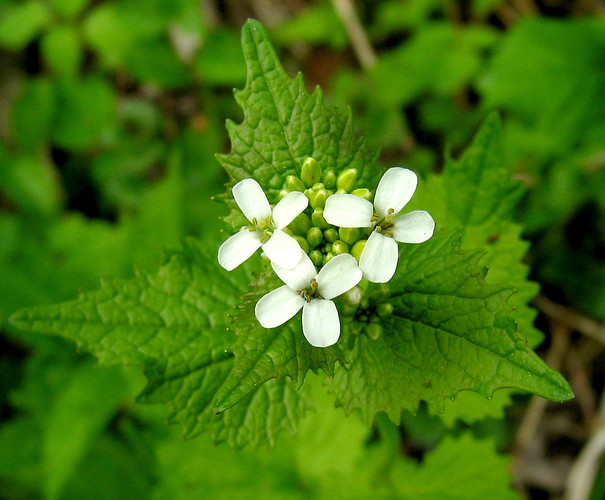
It is a herbaceous biennial plant growing from a deeply growing, thin, white taproot that is scented like horseradish. In the first year, plants appear as a rosette of green leaves close to the ground; these rosettes remain green through the winter and develop into mature flowering plants the following spring. Second year plants grow from 30–100 cm (rarely to 130 cm) tall. The leaves are stalked, triangular to heart-shaped, 10–15 cm long (of which about half being the petiole) and 5–9 cm broad, with a coarsely toothed margin. The flowers are produced in spring and summer in button-like clusters. Each small flower has four white petals 4–8 mm long and 2–3 mm broad, arranged in a cross shape. The fruit is an erect, slender, four-sided pod 4 to 5.5 cm long, called a silique, green maturing pale grey-brown, containing two rows of small shiny black seeds which are released when the pod splits open. A single plant can produce hundreds of seeds, which scatter as much as several meters from the parent plant.
Depending upon conditions, garlic mustard flowers either self-fertilize or are cross-pollinated by a variety of insects. Self-fertilized seeds are genetically identical to the parent plant, enhancing its ability to colonize an area where that genotype is suited to thrive.
Linaria vulgaris, L. genistifolia subsp. dalmatica
Species
Lamiastrum galeobdolon
Species
Tamarix chinensis, T. ramosissima
Species
Elaeagnus angustifolia
Species
Myriophyllum aquaticum
Species
Centaurea montana
Species
Butomus umbellatus
Species
Daphne laureola
Species
Vinca minor
Species
Anthriscus caucalis
Species
Centaurea cyanus
Yellow loosestrife (Lysimachia punctata) plants form a bushy, fast-spreading clump of green leaves, with loose spikes of bright-yellow starry flowers appearing in early to mid-summer. The flowers rise above whorls of light green serrated leaves. Yellow loosestrife is native to central Europe and Turkey, and this perennial has vigorous rhizomes that reach 36” in height and 12-18” across. It also self-seeds to form large colonies. Contact may cause skin irritation or an allergic reaction.
Linaria vulgaris, L. genistifolia subsp. dalmatica
Species
Lamiastrum galeobdolon
Species
Tamarix chinensis, T. ramosissima
Species
Elaeagnus angustifolia
Species
Myriophyllum aquaticum
Species
Centaurea montana
Species
Butomus umbellatus
Species
Daphne laureola
Species
Vinca minor
Species
Anthriscus caucalis
Species
Centaurea cyanus
Wild caraway (Carum carvi) is a biennial plant that invades pastures, rangeland and natural areas and is identified by white groups of flowers at the top of several erect, branched stems that grows 60-90 cm tall. Alternate leaves are very finely divided and 'carrot-like.' Flowers are hermaphroditic and therefore self-fertile, and this plant is difficult to detect when not in flower. It develops a parsnip-like taproot with a black skin and white core.
Native to Eurasia, wild caraway entered Canada as a spice crop (used in rye breads and some liquors) but has escaped cultivation. Though edible, it is not utilized by livestock and can quickly displace nearby vegetation where infestations go uncontrolled. Infestations in forage crops have led to weed seed dispersal in baled hay.
Wild caraway succeeds under forest canopy but not in complete shade, and can survive a light frost or extra moisture in the soil.
Control wild caraway with repeated hand-pulling before seed-set. Seeds can scatter easily, so use a plastic bag to carefully place over mature plants and dispose at a landfill or thoroughly burned. Several years' of monitoring and removal is required to deplete the seed bank. Note that repeated mowing of wild caraway is not effective, as plants re-bloom below cutting height.
Linaria vulgaris, L. genistifolia subsp. dalmatica
Species
Lamiastrum galeobdolon
Species
Tamarix chinensis, T. ramosissima
Species
Elaeagnus angustifolia
Species
Myriophyllum aquaticum
Species
Centaurea montana
Species
Butomus umbellatus
Species
Daphne laureola
Species
Vinca minor
Species
Anthriscus caucalis
Species
Centaurea cyanus
Hairy cat's ear (Hypochaeris radicata) is a perennial that infests pastures, meadows, roadsides, river banks, lawns and disturbed open areas as well as legume and seed crops. It is also thought to be poisonous and is believed to be the cause of Australian Stringhalt in horses.
Hairy cat's ear has 1-1.5" wide dandelion-like, yellow flowerheads at the end of upright stems. Rosettes of rough hairy leaves and a clump of basal leaves form from a woody base. Stems are typically leafless ad branched, and contain a milky juice when broken.
Originally from the Meditterrean, hairy cat's ear is a particular problem on Vancouver Island, Sunshine Coast and emerging in the southern interior of BC, and impacts sensitive Garry Oak ecosystems. It can displace native plants, especially in open areas, and is a nuisance plant on lawns. Hairy cat's ear enjoys a wide range of habitats but thrives in sunny disturbed areas the most.
Control of hairy cat's ear is best when it first appears with hand digging to carefully remove the crown. This invader is persistent and will return following treatments since it has ample airborne seeds that aid rapid spread. Control larger populations with repeated plowing, followed by reseeding or by solarization (plastic cover on soil).
Linaria vulgaris, L. genistifolia subsp. dalmatica
Species
Lamiastrum galeobdolon
Species
Tamarix chinensis, T. ramosissima
Species
Elaeagnus angustifolia
Species
Myriophyllum aquaticum
Species
Centaurea montana
Species
Butomus umbellatus
Species
Daphne laureola
Species
Vinca minor
Species
Anthriscus caucalis
Species
Centaurea cyanus
Wild chervil (Anthriscus sylvestris (L.) Hoffm.) is an annual, biennial or short-lived perennial forb that produces small white flowers in umbrella-like clusters along 2 cm long stalks at the end of stems and grows to 0.3-1.8 m tall. Wild chervil is a prolific seed produce and each flower produces two joined, narrow 6-7mm long seeds that are green at first and mature to shiny brown. Fern-like leaves are softly hairy, triangular and divided into smaller leaflets. Wild chervil has thick tabroots that spread aggressively, extending into the soil nearly 2 m and are very difficult to remove.
Wild chervil can be found in ditches, along roadsides, fencelines, stream banks and moist woods, and competes with pasture and hay crops—reducing forage and production. It is considered regionally noxious in BC and found predominantly in the Fraser Valley.
This invader becomes unpalatable near maturity and livestock will avoid it. It is generally not problematic in cultivated crops, but it acts as a host for a disease that infects other plants in the same family, including carrots, parsnips, and celery. It is difficult to control because of its very deep root system. Wild chervil competes with other plants, shading out smaller plants.
Control of wild chervil includes hand-pulling or digging, but mature plants need to be removed below the crown to prevent resprouting. Mowing must be repeated before the plant sets seed. Chemical control is often precluded due the wet habitat wild chervil prefers. Cut and bag any flowering plants for burning or deep burial. Choose seed mixtures carefully and watch for this in its ingredient list, as it has been found in British wildflower seed mixes.
Linaria vulgaris, L. genistifolia subsp. dalmatica
Species
Lamiastrum galeobdolon
Species
Tamarix chinensis, T. ramosissima
Species
Elaeagnus angustifolia
Species
Myriophyllum aquaticum
Species
Centaurea montana
Species
Butomus umbellatus
Species
Daphne laureola
Species
Vinca minor
Species
Anthriscus caucalis
Species
Centaurea cyanus
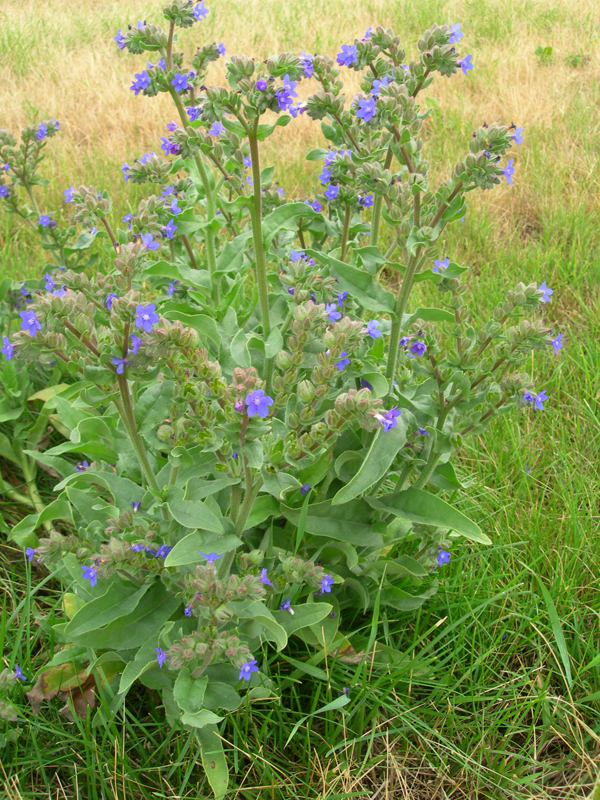
Common bugloss (Anchusa officinalis) is a biennial or perennial forb that shows tubular flowers that are initially reddish and turn deep purplish blue with white centres. The coil gradually straightens as the flower buds open. Leaves are covered with stiff hairs, are basal with stalked and lance-shaped lower leaves, becoming gradually smaller upward on the stalks. Each flower produces a cluster of 4 barbless nutlets. Plants often have several stems and grow 30–80 cm tall.
Common bugloss invades disturbed areas where competing vegetation is sparce, pastures and hay lands — reducing yield and carrying capacity. This invasive spoils alfalfa hay because the succulent leaves and stems become mouldy (it is not a problem for cultivated crops). Common bugloss occurs only rarely in south-central BC and southern Vancouver Island.
Control includes cutting or mowing before plants flower to prevent seed production. Common bugloss also has a deep taproot to remove to prevent re-establishment, and plants and all plant parts should be bagged, removed from the site, and burned. Monitor disturbed sites, especially on sandy or gravelly areas, for new outbreaks. Please take care to clean equipment, vehicles, and footwear before leaving an infested area.
Exotics: European bugloss (Anchusa arvensis) and Italian bugloss (Anchusa azurea) also occur in BC, but they have very limited distribution and only a few specimens have been found.
Linaria vulgaris, L. genistifolia subsp. dalmatica
Species
Lamiastrum galeobdolon
Species
Tamarix chinensis, T. ramosissima
Species
Elaeagnus angustifolia
Species
Myriophyllum aquaticum
Species
Centaurea montana
Species
Butomus umbellatus
Species
Daphne laureola
Species
Vinca minor
Species
Anthriscus caucalis
Species
Centaurea cyanus
Queen Anne's lace (Daucus carota) is an invasive biennial herb that smells like a carrot and grows 3-4' tall, blooming from May to October. This plant shows an umbrella-shaped flower cluster at the top of a central stem, with one or more additional hairy hollow stems. It's slender, woody taproot is carrot-like in smell and taste.
A native of Europe and Asia, Queen Anne's lace invades disturbed dry agriculture land, abandoned fields, waste places, and road sides. It is a threat to recovering grasslands and can be persistent on clay soils. It tends to decline as native grasses and herbaceous plants become established. Queen Anne's lace is common in southwest BC, known from southeast Vancouver Island, the Gulf Island and adjacent mainland, and also from Vernon.
Effective control methods include hand-pulling or mowing in mid to late summer before seed set.
Linaria vulgaris, L. genistifolia subsp. dalmatica
Species
Lamiastrum galeobdolon
Species
Tamarix chinensis, T. ramosissima
Species
Elaeagnus angustifolia
Species
Myriophyllum aquaticum
Species
Centaurea montana
Species
Butomus umbellatus
Species
Daphne laureola
Species
Vinca minor
Species
Anthriscus caucalis
Species
Centaurea cyanus
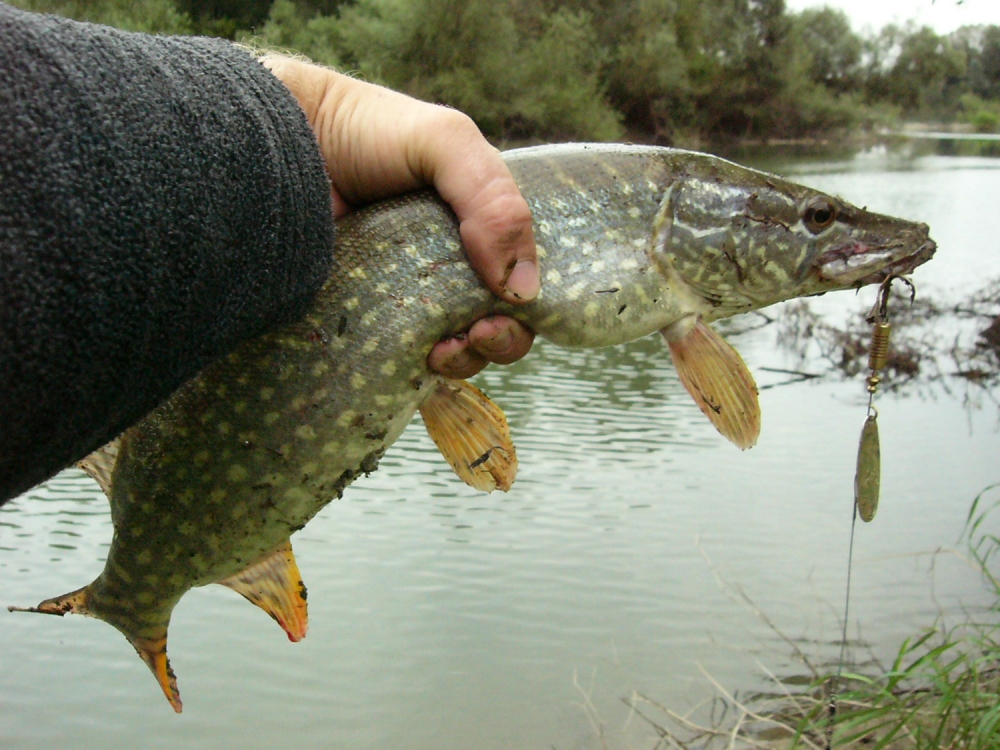
Northern pike can be found throughout most of BC, and is known as a commercial and sport fish, and in some areas an invasive species. The territorial nature of this species makes it a dominant predator in the lakes and rivers it inhabits. Typically, northern pike will eat whatever is available—including fish, amphibians, mice, and small waterfowl—and is the reason some areas consider this species an invasive. What can you do? Although this species is not invasive throughout BC, it is illegal to transport them from one water body to another. If this species has been found in a new location, please report it to your local invasive species committee or directly to BC's DFO office.
Linaria vulgaris, L. genistifolia subsp. dalmatica
Species
Lamiastrum galeobdolon
Species
Tamarix chinensis, T. ramosissima
Species
Elaeagnus angustifolia
Species
Myriophyllum aquaticum
Species
Centaurea montana
Species
Butomus umbellatus
Species
Daphne laureola
Species
Vinca minor
Species
Anthriscus caucalis
Species
Centaurea cyanus
Yellow Toadflax (Linaria vulgaris), also known as common toadflax, is an herbaceous perennial known for its colony forming properties. This invasive species uses creeping roots to rapidly take over road sides, pastures, and grasslands.
Listed as provincially noxious under the BC Weed Control Act, yellow toadflax is present throughout most of BC; abundant in the Okanagan, Similkameen, Thompson, Boundary, East Kootenay, and Cariboo regions.
With vibrant yellow flowers, similar to that of a snapdragon, yellow toadflax is able to stand out when it has established. These yellow flowers are generally 2-3.5cm in length and have a small orange spot on the lower lip; the plant itself ranges from 10-80cm in height once mature.
Assumed to have been introduced as an ornamental plant, yellow toadflax now spreads using creeping roots and seed dispersal. The seeds of this species are still commonly found in ‘wildflower’ seed mix; please avoid using these seed mixes to prevent further spread.
Linaria vulgaris, L. genistifolia subsp. dalmatica
Species
Lamiastrum galeobdolon
Species
Tamarix chinensis, T. ramosissima
Species
Elaeagnus angustifolia
Species
Myriophyllum aquaticum
Species
Centaurea montana
Species
Butomus umbellatus
Species
Daphne laureola
Species
Vinca minor
Species
Anthriscus caucalis
Species
Centaurea cyanus
Yellow Archangel (Lamiastrum galeobdolon) is considered a shade tolerant species which is commonly found in hanging baskets and as ground cover. With many methods of reproduction, yellow rchangel can spread rapidly, covering natural forest floors while not providing any nutritional or cover value to animals.
Currently abundant in the Lower Mainland, yellow archangel can also be found on Vancouver Island and the Gulf Islands along with several isolated patches within BC. Easily escaping from gardens and residential properties, this plant can be found taking over natural vegetation in forested areas, green belts, and riparian areas.
Yellow archangel can be identified by its trailing ground cover growth, sometimes growing uprights if it is attempting to grow over something. They have hairy oval shaped tooth leaves, typically with silver-gray markings. Their flowers are small and yellow with orange and brown markings; flowers will form into 4 nutlets containing one seed each.
Yellow archangel has several forms of reproduction including: seed dispersal, fragmentation, and nodes on their stem. With multiple forms of spread, it is important to properly care for existing yellow archangel plants and avoid purchasing them. When choosing ornamental plants please be ‘PlantWise’ and replace with non-invasive alternatives.
Linaria vulgaris, L. genistifolia subsp. dalmatica
Species
Lamiastrum galeobdolon
Species
Tamarix chinensis, T. ramosissima
Species
Elaeagnus angustifolia
Species
Myriophyllum aquaticum
Species
Centaurea montana
Species
Butomus umbellatus
Species
Daphne laureola
Species
Vinca minor
Species
Anthriscus caucalis
Species
Centaurea cyanus
Tamarisk (Tamarix chinensis), also known as salt cedar, is a shrub-like tree which has become invasive to riparian areas. This is aggressive woody shrub is known to produce dense stands around riparian areas which over crowd native vegetation. The term 'salt cedars comes from its ability to secrete salt from its leaves, which prevents the growth of any native vegetation within its range.
Currently, tamarisk is only located in several small isolated pockets along the BC and U.S. border. Within BC, tamarisk can be found in full sun, moist environments with saline or alkaline soil conditions. Tamarisk can be identified by its small shrubby tree like appearance, small whitish pink flowers and small scaly leaves.
With hundreds of thousands of seeds produced from one tree, tamarisk is easily spread via seed dispersal as well as underground plant stems. Along with increasing the saline of soil, tamarisk uses its roots to deplete the waterbodies of the riparian areas they inhabit.
This species has continues to cause harmful damage to natural riparian vegetation all over the Southwestern U.S—prevention is key in BC to avoid further damage. Please don't plant tamarisk as an ornamental species on your property; instead be ‘PlantWise’ and choose a non-invasive alternative species.
Linaria vulgaris, L. genistifolia subsp. dalmatica
Species
Lamiastrum galeobdolon
Species
Tamarix chinensis, T. ramosissima
Species
Elaeagnus angustifolia
Species
Myriophyllum aquaticum
Species
Centaurea montana
Species
Butomus umbellatus
Species
Daphne laureola
Species
Vinca minor
Species
Anthriscus caucalis
Species
Centaurea cyanus
Russian olive (Elaeagnus angustifolia) is a relatively small ornamental tree which has recently impacted several regions in BC. First introduced for its silver leaves and ability to withstand cold BC winters, this tree is now out-competing native vegetation around the province.
This tree is currently abundant in the Southern Interior, the Okanagan, and the Lower Mainland. Its ability to withstand flooding, drought, shade, and full sun give this tree few growing limitations within its areas.
Distinguishable due to its silver leaves, fragrant yellow flowers and silver berries, Russian olive is a popular ornamental choice among gardeners. The silver berries produced by this tree aid in its dispersal, highly selected for amongst birds and mammals, the seedy diet of these animals contributes to its spread.
The spread of this species has led to negative impacts on several native trees and plants within BC, because of this all sightings of Russian olive in BC must be reported to manage the spread. When planting an ornamental garden, please be ‘PlantWise’ and choose species which are non-invasive as alternatives.
Linaria vulgaris, L. genistifolia subsp. dalmatica
Species
Lamiastrum galeobdolon
Species
Tamarix chinensis, T. ramosissima
Species
Elaeagnus angustifolia
Species
Myriophyllum aquaticum
Species
Centaurea montana
Species
Butomus umbellatus
Species
Daphne laureola
Species
Vinca minor
Species
Anthriscus caucalis
Species
Centaurea cyanus
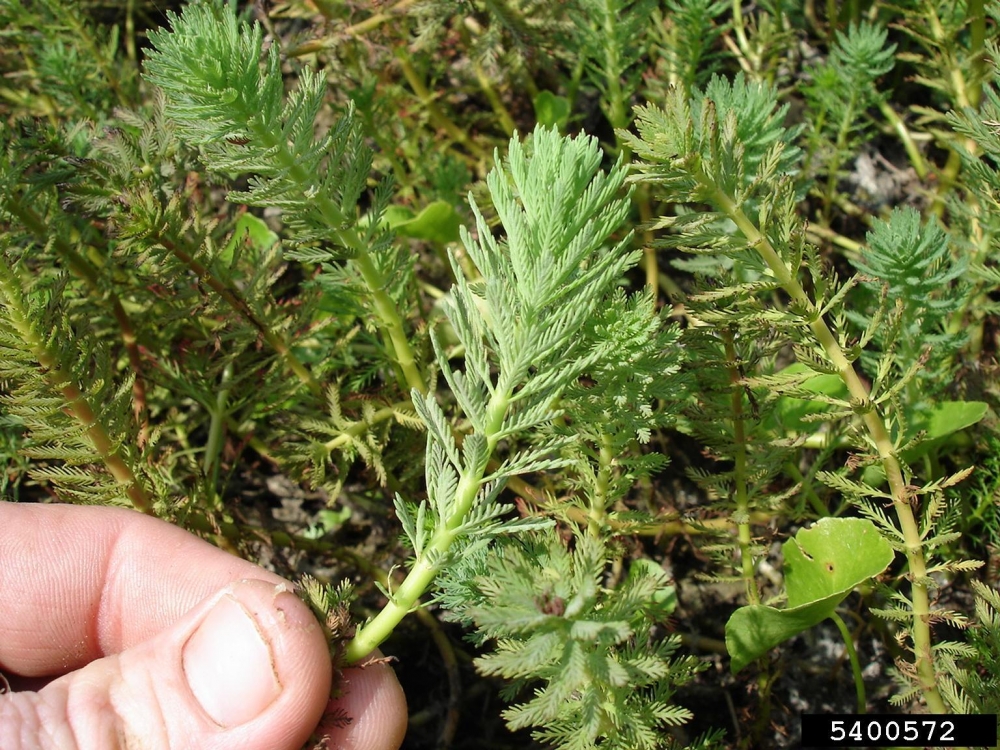
Parrot’s feather (Myriophyllum aquaticum) is an aquatic perennial that is currently impacted several areas within BC. This species is known to out-compete and replace native aquatic vegetation with its dense stands. These stands also create pools of stagnant water, leading on an increase in mosquito breeding grounds. Parrot’s feather is currently present in freshwater lakes, ponds, or streams in the Lower Mainland and Fraser Valley regions.
Named for its feather-like bright green foliage, parrot’s feather has both submersed and emergent plant parts. Intertwined mats typically have standing stems over 1.5m in length which are covered in submersed stiff leaves roughly 2-5cm long; limp emergent leaves range from 1.5-3.5cm in length.
Unfortunately, parrot’s feather is a popular aquatic garden species and intentional planting has spread this species into natural water bodies. Generally, all parrot’s feather plants are female and because of this they do not produce seeds; this plant spreads via underground stems, and plant fragments can be dispersed with water, animals, boats, and fishing gear.
Once established, parrot’s feather is a difficult invasive to manage. Due to its submersed and emergent vegetation, herbicides are difficult to effectively implement. Prevention is key with the species; be PlantWise and please avoid using parrot’s feather in aquatic gardens or aquariums. Properly Clean, Drain, Dry your boat and fishing gear before leaving an infected site.
Linaria vulgaris, L. genistifolia subsp. dalmatica
Species
Lamiastrum galeobdolon
Species
Tamarix chinensis, T. ramosissima
Species
Elaeagnus angustifolia
Species
Myriophyllum aquaticum
Species
Centaurea montana
Species
Butomus umbellatus
Species
Daphne laureola
Species
Vinca minor
Species
Anthriscus caucalis
Species
Centaurea cyanus
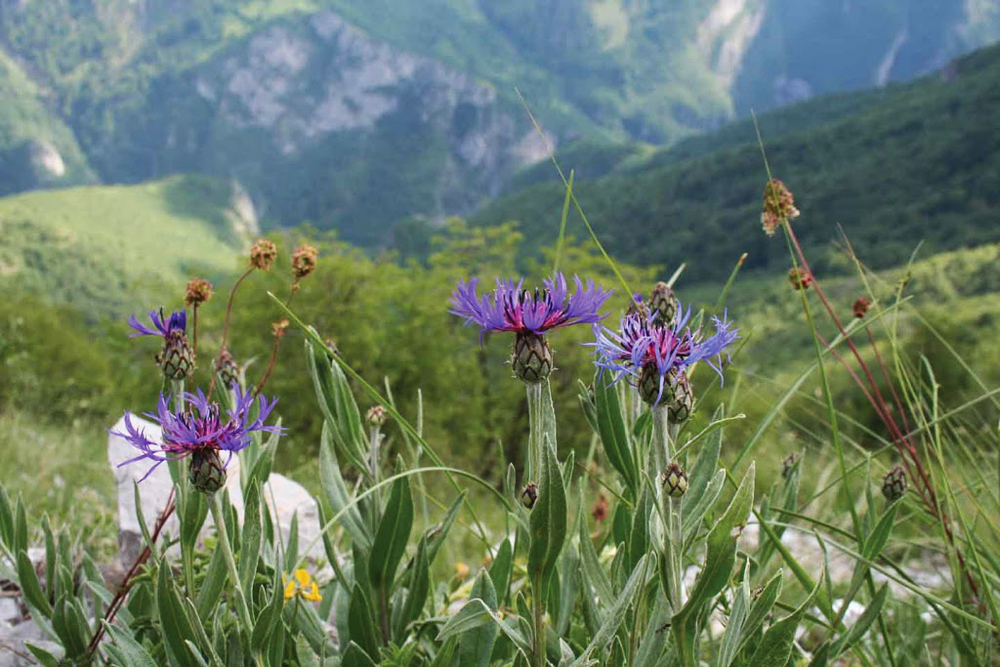
Mountain bluet (Centaurea montana) is a popular ornamental plant; its ability to self-seed and large blue flowers make it the top choice among many gardeners. Unfortunately, once planted, this species can easily spread into natural ecosystems.
Mountain bluet can be found in isolated patches of the central interior, the northwest corner, and the Lower Mainland of BC. In these areas, the plant will colonize in disturbed open areas, forests, and along road sides.
Mountain bluet can range from 30-80cm in height with fine hairs covering the steam and lance shaped leaves. Bright blue knapweed-like flowers bloom between April and June. Each flower contains female and male organs allowing this species to self-pollinate.
Its ability to self-seed makes this species hard to manage; along with self-seeding it is also able to spread using rhizomes. This fast growing, long-living plant has also adapted to grow in soil conditions ranging from dry-moist. For these reasons, preventing mountain bluet from further spread throughout BC is very important. When shopping for ornamental species please remember to be ‘PlantWise’ and pick non-invasive species as alternatives.
Linaria vulgaris, L. genistifolia subsp. dalmatica
Species
Lamiastrum galeobdolon
Species
Tamarix chinensis, T. ramosissima
Species
Elaeagnus angustifolia
Species
Myriophyllum aquaticum
Species
Centaurea montana
Species
Butomus umbellatus
Species
Daphne laureola
Species
Vinca minor
Species
Anthriscus caucalis
Species
Centaurea cyanus
Flowering rush (Butomus umbellatus) is a beautiful aquatic perennial resembling a large sedge. This delicate-almond scented plant can be found along shore lines of lakes or rivers. As an invasive species, this plant creates dense stands which can be harmful to native flora and fauna.
Within Canada, this species has been classified as one of five invasive plants that have had a major ecological impact on natural ecosystems. Although it has only been sighted in one location of BC, flowering rush has caused significant damage in the Great Lakes.
Flowering rush is typically hard to identify due to its similar appearance of several native aquatic species, it can be easier to identify once the small pink flowers of this species have bloomed. The stem can reach approximately 3 feet in height and holds an umbrella shaped array of pinkish white pedaled flowers.
Like other aquatic invasive species, the spread of flowering rush is partly due to its popularity in aquatic gardens, and has now been introduced to natural water bodies. Once established, it spreads with underground plant stems and roots, as well as animals.
Currently flowering rush is not heavily impacting BC; preventing the spread of this plant is the only way to ensure it won’t in the future. Always ‘Clean, Drain, Dry’ boats and equipment before leaving a water body, take extra caution when transferring boat or equipment from one province to another. Be ‘PlantWise’ and choose an alternative non-invasive species when planting a garden.
Linaria vulgaris, L. genistifolia subsp. dalmatica
Species
Lamiastrum galeobdolon
Species
Tamarix chinensis, T. ramosissima
Species
Elaeagnus angustifolia
Species
Myriophyllum aquaticum
Species
Centaurea montana
Species
Butomus umbellatus
Species
Daphne laureola
Species
Vinca minor
Species
Anthriscus caucalis
Species
Centaurea cyanus
Although it has a poisonous sap, Daphne or Spurge-Laurel (Daphne laureola), is a top ornamental pick for gardens. This species can be purchased at a number of garden centres in BC and is typically planted as an alternative to dwarf rhododendron.
The Canadian Poisonous Plants Information System has listed daphne as a poisonous plant, as well as a toxic plant warning issued from Worksafe BC. This toxic sap has been known to cause skin rashes, nausea, swelling of the tongue, and coma.
Daphne was recently introduced to the Vancouver Island, Gulf Islands, and the Lower Mainland regions of BC and can be found along roadsides and moist wooded areas. Daphne is popular among gardeners for its fragrant yellow-green flowers and glossy dark green whorled arranged leaves located on the stem which reach approximately 1.5m in height.
Daphne does not require open or disturbed soil to colonize and can adapt to sun or shade conditions, for these reasons it is very important to prevent further spread of this species. Daphne is notorious for taking over natural vegetation; to prevent spreading, gardeners are asked to be ‘PlantWise’ when selecting new ornamental plants.
Linaria vulgaris, L. genistifolia subsp. dalmatica
Species
Lamiastrum galeobdolon
Species
Tamarix chinensis, T. ramosissima
Species
Elaeagnus angustifolia
Species
Myriophyllum aquaticum
Species
Centaurea montana
Species
Butomus umbellatus
Species
Daphne laureola
Species
Vinca minor
Species
Anthriscus caucalis
Species
Centaurea cyanus
Common periwinkle (Vinca minor) is a small evergreen plant with showy white or purple flowers. This invasive plant is capable of forming dense mats which supress native plant species found on the forest floor.
Currently only located in the Lower Mainland of BC, common periwinkle can be found high soil moisture locations such as forested areas or water courses.
Common periwinkle is an evergreen vine-like plant with glossy dark green leaves; they have white or purple five pedalled flowers that are roughly 10cm in diameter.
Due its rapid growing capability and its ability to withstand poor growing conditions, common periwinkle continues to spread through BC. In order to prevent further spread of this species please be ‘PlantWise’ when selecting ornamental plants for gardens. Use alternative non-invasive species in place.
Linaria vulgaris, L. genistifolia subsp. dalmatica
Species
Lamiastrum galeobdolon
Species
Tamarix chinensis, T. ramosissima
Species
Elaeagnus angustifolia
Species
Myriophyllum aquaticum
Species
Centaurea montana
Species
Butomus umbellatus
Species
Daphne laureola
Species
Vinca minor
Species
Anthriscus caucalis
Species
Centaurea cyanus
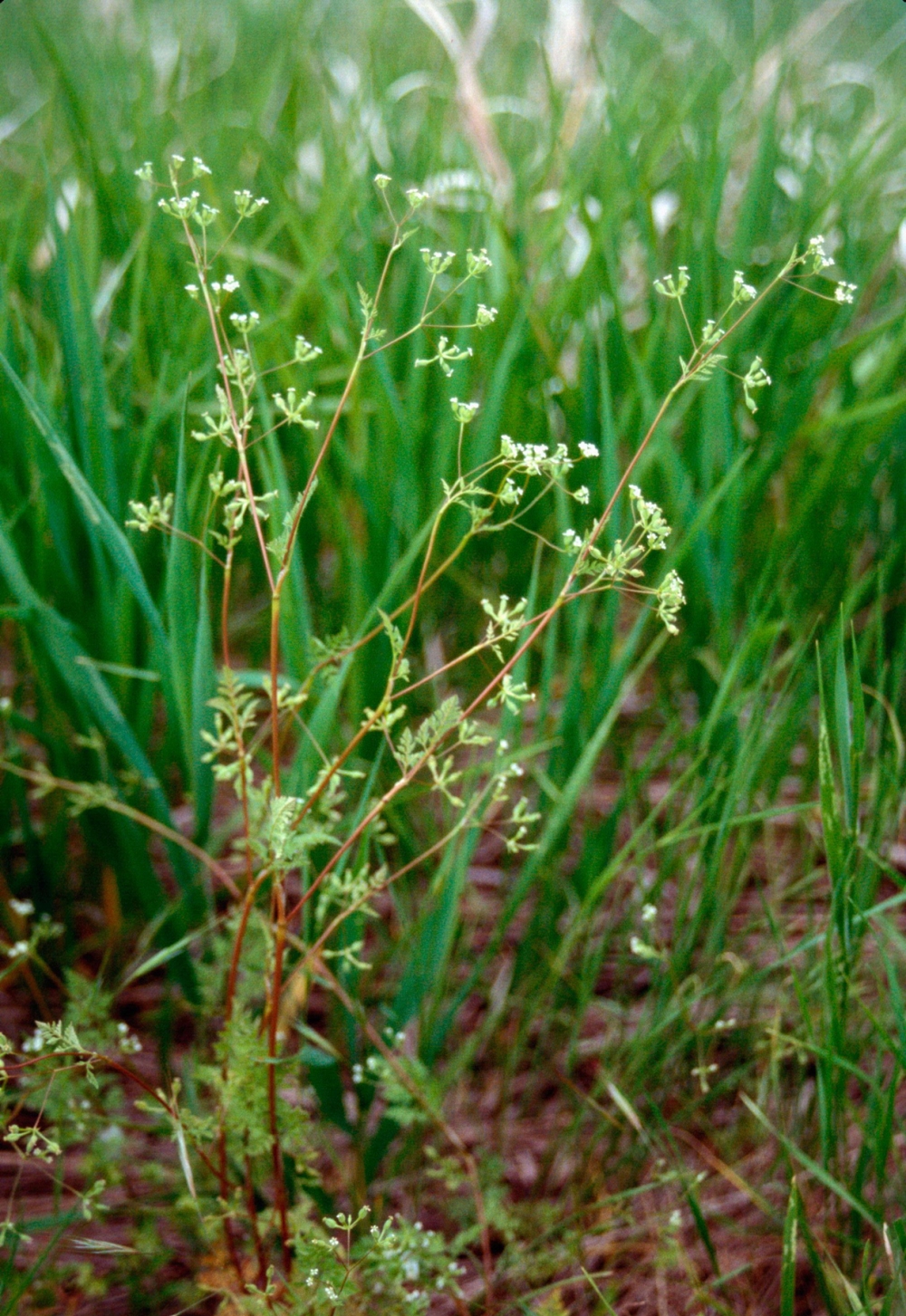
Bur Chervil (Anthriscus caucalis) is an annual forb plant which has adapted to establish in poor growing conditions. This England native has slowly begun to invade parts of Vancouver Island; Comox, Cowichan Valley, and Nanaimo have all had populations reported. Currently bur chervil is listed as a provincially noxious weed under the BC Weed Control Act.
Bur Chervil is typically found in disturbed areas such as ditches or waste places and also moist fields. It can range in height from under 1m to over 2m; small white flowers have 5 petals which are arranged in an umbrella shape.
This species relies on means of seed dispersal for reproduction; the bur-like seeds allows bur chervil to cling to mammals and birds which carry the seeds to new areas. As bur chervil establishes, it is able to out-compete native vegetation and leads to negative effects on the natural biodiversity.
When leaving an infected bur chervil site, assure to properly clean your clothes, shoes, and equipment to avoid any seeds attempting to hitch a ride with you. Prevention is the best way to reduce the spread of this species.
Linaria vulgaris, L. genistifolia subsp. dalmatica
Species
Lamiastrum galeobdolon
Species
Tamarix chinensis, T. ramosissima
Species
Elaeagnus angustifolia
Species
Myriophyllum aquaticum
Species
Centaurea montana
Species
Butomus umbellatus
Species
Daphne laureola
Species
Vinca minor
Species
Anthriscus caucalis
Species
Centaurea cyanus
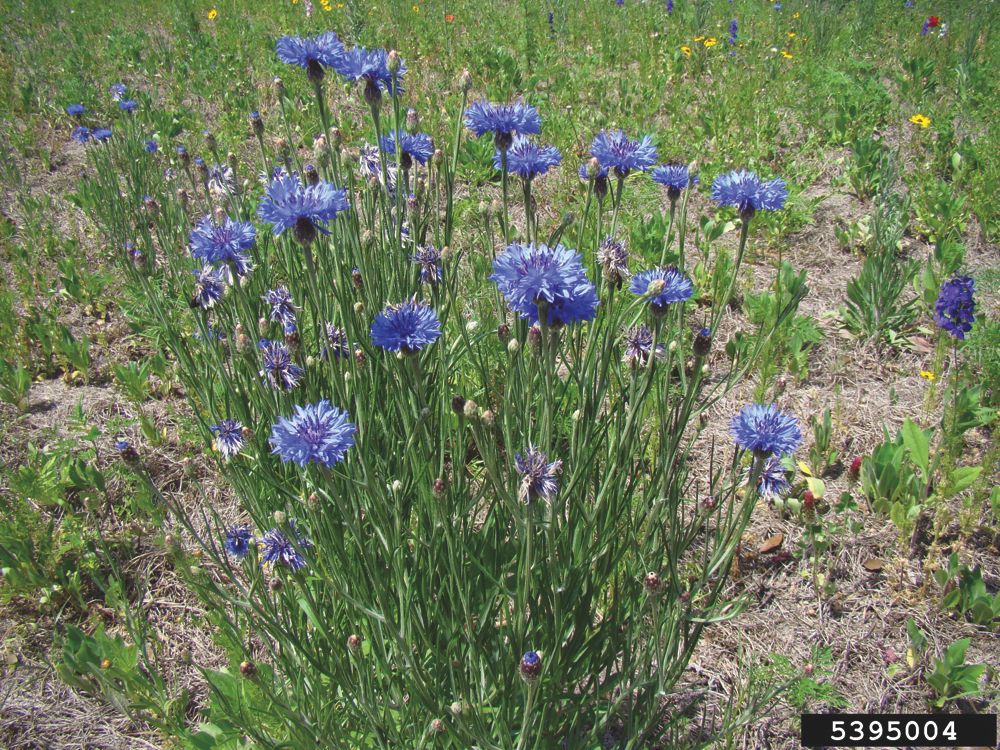
Known as “cornflower” in southern Europe where this annual species is native and a common weed in grain (“corn”) fields. Bachelor’s button has striking sky-blue (sometimes purple, pink or white) pompom flowers atop 30- to 90-cm-tall, grey-green stems loosely clothed with slender leaves of the same colour. Bachelor’s buttons are frequently found as a significant component of “wildflower” seed mixes—avoid these. Seedlings grow quickly, produce copious seed and readily invade dry meadows, fields and grasslands.


 Japanese beetle is not a risk to human or animal health or food safety. Adult Japanese beetles skeletonize leaves and eat flowers and fruit. They can significantly damage landscape plants, ornamental plants, fruit and vegetable gardens, nurseries, orchards, and agricultural crops. The larvae feed on the roots of turf and other plants and can seriously damage lawns, sports fields, golf courses and turf production.
 Japanese Beetle Resources